
Why Your State Selection Can Make or Break Asset Protection
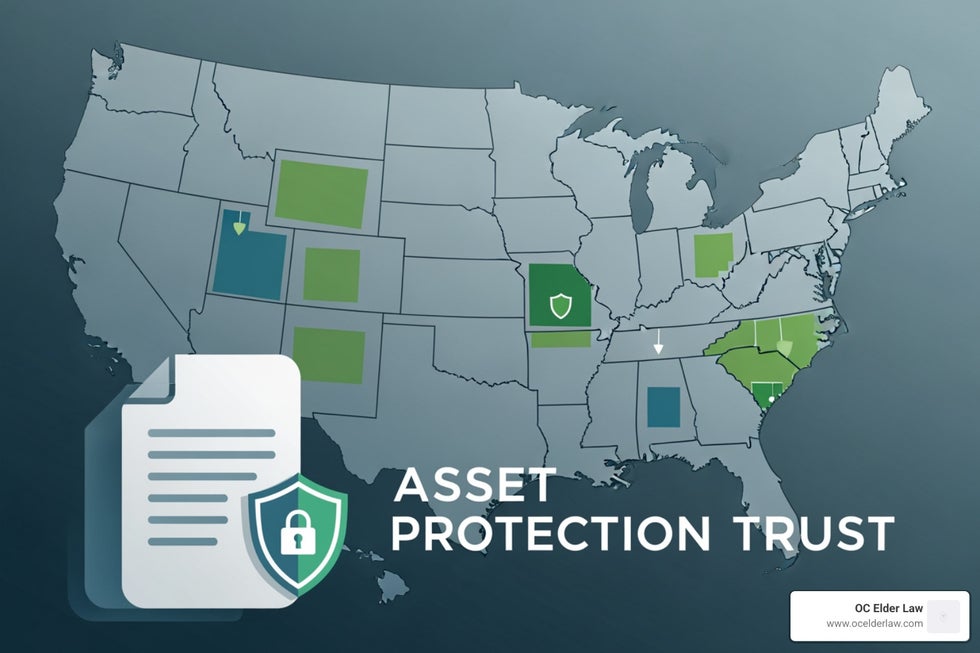
Choosing the best state for asset protection trust planning is about selecting a legal fortress to shield your wealth from future creditors and lawsuits. Only 17 to 18 states allow Domestic Asset Protection Trusts (DAPTs), and the strength of protection varies significantly between them.
Quick Answer: Top States for Asset Protection Trusts
| State | Key Advantage | Statute of Limitations | Exception Creditors |
|---|---|---|---|
|
Nevada |
No exception creditors, strongest protection |
2 years |
None |
|
South Dakota |
Permanent privacy seal, perpetual trusts |
2 years |
Limited |
|
Alaska |
First DAPT state, no statutory exceptions |
4 years |
None |
|
Delaware |
Specialized Chancery Court |
4 years |
Spousal/child support |
|
Wyoming |
High settlor control, 1,000-year trusts |
4 years |
Limited |
The difference between jurisdictions can be the difference between assets being truly protected or vulnerable to court challenges. Nevada offers protection from all creditors, including alimony and child support, while others have carve-outs. For California residents, establishing a trust in a DAPT-friendly state by appointing a local trustee or holding assets through local entities is a vital strategy.
Beyond creditor protection, top states offer no state income tax on trust assets, dynasty trust laws for perpetual wealth transfer, and modern features like decanting and directed trust statutes. As Marty Burbank, founder of OC Elder Law, I help families steer these nuances to build resilient asset protection strategies.
Why Choosing the Best State for Asset Protection Trust Matters
Selecting a "trust situs"—the legal home for your trust—is a strategic decision. As Nate Rothbauer of Ascent Private Capital Management notes, "Some states have modified their laws to make them more favorable for trusts than others." This choice dictates how long a trust lasts and how well it shields assets.
For residents of California and Washington, where DAPTs are not recognized, choosing a robust DAPT-friendly state is essential. A properly structured trust can prevent costly litigation and influence settlement outcomes. Learn more in our guide, "Everything You Need to Know about Asset Protection".
Key factors influenced by state law include:
- Tax Benefits: Many top states have no state income, estate, or inheritance taxes.
- Privacy: Superior protections keep trust details confidential.
- Trust Duration: Dynasty laws allow wealth transfer across generations without additional taxes.
- Flexibility: Modern laws allow "decanting" (modifying trust terms) and "directed trusts" (separating investment and administrative duties).
Proactive planning is critical. Establishing a trust after a lawsuit is imminent may be deemed a fraudulent transfer. For more details, see "More info about asset protection planning".
Top 5 Jurisdictions for Wealth Preservation
The best state for asset protection trust planning typically involves jurisdictions with debtor-friendly laws. Nevada, South Dakota, Alaska, Delaware, and Wyoming consistently lead the field.
| State | Key Legal Provisions | Statute of Limitations | Exception Creditors | Dynasty Duration | Privacy |
|---|---|---|---|---|---|
|
Nevada |
Self-settled spendthrift trusts, decanting |
2 years |
None |
365 years |
Judge's discretion |
|
South Dakota |
Self-settled spendthrift trusts, decanting |
2 years |
Limited |
Perpetual |
Permanent seal |
|
Alaska |
First DAPT state, marital consent |
4 years |
None |
Perpetual |
Public records |
|
Delaware |
Chancery Court, spousal waiver |
4 years |
Limited |
110 years (RE) |
Sealed 3 years |
|
Wyoming |
High settlor control, purpose trusts |
4 years |
Limited |
1,000 years |
Judge's discretion |
For deeper insights, see "Which Trust Situs is Best in 2022?".
Finding the Best State for Asset Protection Trust: A Comparison
We evaluate states based on the statute of limitations for fraudulent transfers and the existence of "exception creditors." Shorter look-back periods and fewer exceptions provide stronger protection. You do not need to live in these states to establish a trust there. Our article on "Domestic Asset Protection Trust" explains how California residents can leverage these laws.
Nevada: The Gold Standard
Nevada is often considered the premier jurisdiction for DAPTs due to its robust statutes.
- No Exception Creditors: Nevada law protects against all claims, including alimony and child support. Research confirms "Nevada DAPTs protect against this type of debt."
- Short Statute of Limitations: A 2-year period (reducible to 6 months if published) offers quick certainty.
- Tax and Modernity: No state income tax and flexible decanting laws make it highly attractive. "Nevada is generally considered to be favorable to the formation of DAPTs." Learn more at "Asset Protection Trust".
South Dakota: Best Privacy and Longevity
South Dakota is a top choice for those prioritizing confidentiality and multi-generational planning.
- Best Privacy: It is the only state with a permanent seal on trust litigation records.
- Perpetual Trusts: Assets can grow indefinitely without estate taxes at each generation.
- Asset Protection: Protection applies unless debt was in place at the time of transfer. As noted, "South Dakota allows this type of debt only if the debt was in place at the time assets were transferred." See "How to Protect Your Assets from Creditors and Lawsuits" for more.
Key Legal Provisions That Define a Strong DAPT State
The best state for asset protection trust planning is defined by specific legal mechanisms:
- Statute of Limitations: Nevada's 2-year period is the shortest, while others typically use 4 years. Shorter periods mean faster protection.
- Exception Creditors: Nevada and Alaska offer the strongest shields by having virtually no statutory exceptions for alimony or child support. This is vital when asking "Does a Trust Protect Your Assets from a Lawsuit".
- Decanting: This allows trustees to move assets to a new trust with better terms. South Dakota and Nevada have highly flexible decanting statutes.
- Directed Trusts: These allow the separation of investment management from administrative duties, protecting trustees from liability for investment choices.
- Chancery Court: Delaware's specialized court provides a predictable environment for resolving complex trust disputes.
- Dynasty Trust Laws: These allow trusts to last for centuries or in perpetuity, avoiding estate taxes across generations. South Dakota and Alaska allow perpetual trusts, while Wyoming allows 1,000 years.
Leveraging these provisions is how we ensure robust protection for California residents. See "A Practical Guide to California Asset Protection Trust Benefits" for more.
Domestic vs. Offshore: When to Look Beyond U.S. Borders
Domestic Asset Protection Trusts (DAPTs) operate within the U.S., while offshore trusts are established in foreign jurisdictions like the Cook Islands or Nevis.
Domestic Asset Protection Trusts (DAPTs): DAPTs are powerful but remain subject to U.S. federal court jurisdiction. The case of Tangwall v. Wacker suggests that a DAPT in one state might be vulnerable to judgments from the settlor's home state. As noted by Kiplinger, "The Alaska Supreme Court recently ruled on a case that involved a DAPT set up in Alaska by Montana residents", highlighting potential jurisdictional complexities.
Offshore Asset Protection Trusts: Offshore trusts offer higher insulation because foreign trustees are not bound by U.S. court orders. Benefits include:
- Insulation from U.S. Courts: Creditors must often re-litigate in the foreign jurisdiction.
- Higher Burden of Proof: Many jurisdictions require proof "beyond a reasonable doubt."
- Privacy and Relocation: Stricter privacy and the ability to hold assets physically offshore.
Offshore trusts are more complex and costly. For most, a well-structured DAPT in Nevada or South Dakota provides sufficient protection. See "Asset Protection 101: Using Irrevocable Trusts to Guard Assets" for more on these structures.
Frequently Asked Questions about Asset Protection Trusts
Can I move an existing trust to a better state?
Yes, through "trust migration" or decanting. Assets from an old trust are transferred to a new one in a state with better laws. This requires establishing "sufficient connections" to the new state, such as appointing a local trustee. This process allows you to access superior protection or tax benefits. See "Asset Protection Planning" for guidance.
How does an LLC improve a DAPT?
Combining a DAPT with an LLC creates a layered defense:
- Charging Order Protection: If you face a personal judgment, creditors may only receive a "charging order" against your LLC interest, which doesn't grant them control or ownership of assets.
- Asset Layering: The DAPT owns the LLC, and the LLC owns the assets, creating multiple barriers for creditors.
- Limited Liability: Lawsuits related to specific assets (like real estate) are confined to the LLC holding that asset. For more, see "Does an LLC Protect Your Personal Assets".
Does California recognize Domestic Asset Protection Trusts?
California does not recognize self-settled spendthrift trusts. If a California resident creates a DAPT under California law, creditors can likely access the assets. However, residents can establish trusts in DAPT-friendly states like Nevada. While jurisdictional challenges exist, strategic planning—such as using out-of-state trustees—helps leverage the laws of those premier jurisdictions. For more, see "Asset Protection Trust California".
Conclusion
For residents of California and Washington, choosing the best state for asset protection trust planning is essential for wealth preservation. States like Nevada and South Dakota offer distinct advantages in creditor protection, privacy, and longevity. At OC Elder Law, we provide the expertise to build a resilient financial future custom to your goals. Don't leave your legacy to chance. Explore our services at Protect Your Assets to secure your family's future.


Comments
There are no comments for this post. Be the first and Add your Comment below.
Leave a Comment